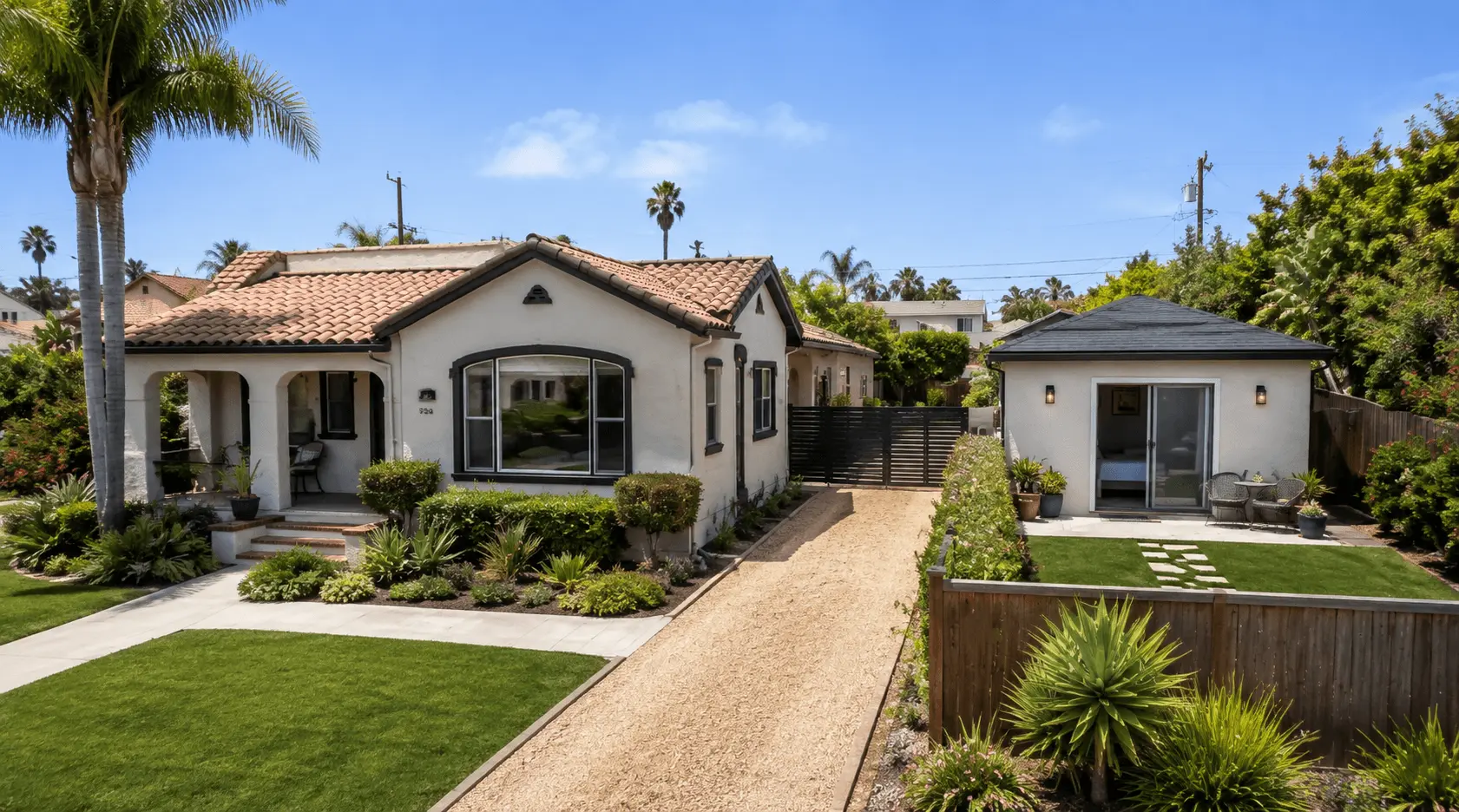
Old house renovation San Diego homeowners take on is a different job from updating a newer home. The framing is often solid and the character is hard to replace, but the wiring, plumbing and foundation were built to the standards of their time, and some of that work only shows itself once the walls are open. Planning for those surprises is the difference between a smooth renovation and a stressful one.
This guide covers what to check before you start, how permits and historic review work in the city, what to budget, and what to keep, update or replace in a home from the 1920s through the 1970s.
Old House Renovation San Diego: What Makes It Different
Much of the region’s housing was built between the 1920s and the 1970s. That includes craftsman bungalows and Spanish-style homes in neighborhoods like North Park, Kensington and Mission Hills, and mid-century ranch and split-level homes in areas like Allied Gardens, Serra Mesa and San Carlos. These homes offer solid construction, established neighborhoods, and character that is expensive to build today.
They also share a pattern. The layout is often smaller and more closed-off than current families want, the systems have usually been patched over the years, and the condition of what is behind the walls is a question mark. A good plan works with all three.
Renovation vs. Restoration: What Is the Difference?
The two words get used interchangeably, but they describe different goals. Restoration returns a home, or part of it, to its original condition using period materials and methods. It is most common with designated historic homes and with owners who want a faithful result. Renovation updates a home for modern living, such as a new kitchen, better insulation or an opened floor plan, while keeping what is worth keeping.
Most homeowners land in between. They keep original windows, trim, floors and built-ins, then rebuild the systems and the rooms that wear hardest, such as the kitchen and bathrooms. Deciding early where your project sits on that spectrum shapes the budget, the materials and the permit path.
What to Check Before You Renovate an Older House
An inspection by a contractor who knows older homes pays for itself. These are the areas to look at first:
Electrical
Homes from the 1940s and earlier may have knob-and-tube wiring, and some homes from the late 1960s and 1970s have aluminum wiring. Original panels are often too small for a modern kitchen, air conditioning or an electric vehicle charger. An upgrade is usually needed before or alongside a larger remodel.
Plumbing
Galvanized steel pipes corrode from the inside, cast iron drain lines wear out, and some homes from the late 1970s through the mid-1990s have polybutylene supply pipes that are prone to failure. A camera inspection of the sewer line is worth doing before new floors and walls go in.
Foundation and Framing
Many older homes sit on raised or post-and-pier foundations. Look for cracks, uneven floors, termite damage and dry rot, and ask whether seismic retrofitting is needed. Fixing these problems early is far cheaper than finding them after the finishes are installed.
Lead Paint and Asbestos
Homes built before 1978 may contain lead paint, and some materials used before the 1980s, such as popcorn ceilings, older vinyl flooring and pipe insulation, may contain asbestos. Test before demolition. Contractors working on pre-1978 homes are required to follow lead-safe work practices.
Windows, Insulation and Roof
Original windows and thin or missing insulation drive energy loss, but original wood windows can often be repaired and weatherstripped instead of replaced. Check the roof, flashing and drainage too, because water damage is a common hidden cost.
Permits and Historic Review in San Diego
Most whole-house and addition work needs a building permit through the City of San Diego’s Development Services Department, or the building department of the city where you live. Electrical, plumbing and structural work is inspected.
Older homes add one more step. If your house is 45 years old or older and the work changes the exterior, the city may require a historic review. That can affect window replacements, additions and changes to the front of the home. Designated historic properties have stricter rules, and may qualify for the Mills Act, a property tax program for qualifying historic homes. Ask the city whether your home qualifies before you finalize plans.
True grants for private homeowners restoring an old house are rare, so plan the budget around your own funds and any tax incentives that apply.
Old House Renovation Cost: What to Budget
Renovating an older house usually costs more per square foot than a newer one, because more of the work is invisible: electrical, plumbing, structure and repairs. For typical ranges by scope, see our whole house renovation cost guide. Older homes tend to land at the higher end of each tier. These are the items that most often push the number up:
- System replacement: rewiring, re-piping and a new electrical panel.
- Structural repairs: foundation work, seismic retrofitting, and replacing damaged framing.
- Testing and removal: lead and asbestos testing, and removal where needed.
- Matching original details: custom trim, millwork and repaired windows.
- Design, permits and review: including historic review where it applies.
Set aside a contingency of 15 to 25 percent for a home that is 50 years or older, compared with about 10 to 15 percent for a newer one. If nothing goes wrong, you keep it. If something does, the project keeps moving.
How much does it cost to completely renovate an old house? It depends on the size of the home and the scope, from a cosmetic update to a full gut renovation, and the honest answer comes from an inspection and a written scope.
Renovating Homes From the 1920s to the 1970s
Homes from each era tend to have their own strengths and common problems. These are typical patterns, not rules, so every house still needs its own inspection:
| Era | Typical homes | Common issues |
|---|---|---|
| 1920s – 1930s | Craftsman bungalows, Spanish-style homes, cottages | Plaster walls, knob-and-tube wiring, small closets, raised or post-and-pier foundations, original wood windows |
| 1940s – 1950s | Ranch and minimal traditional homes | Small rooms, galvanized plumbing, limited electrical capacity, closed-off kitchens |
| 1960s – 1970s | Ranch, split-level and mid-century homes | Aluminum wiring in some homes, popcorn ceilings, cast iron drains, dated bathrooms |
A 1970s house often renovates well because the framing is sound and the lots are generous. Opening the kitchen to the living room and updating the bathrooms usually makes the biggest difference.
What to Keep, Update or Replace
A simple rule works for most older homes: keep what is hard to replace, update what is hard-wearing, and replace what is failing.
- Keep: original wood windows and trim, hardwood floors, built-in cabinets, arched doorways and plaster details when they are in good shape.
- Update: kitchens, bathrooms, insulation and the main electrical panel, so the home works for how you live.
- Replace: outdated wiring, failing pipes, damaged framing, and anything that is a safety or code concern.
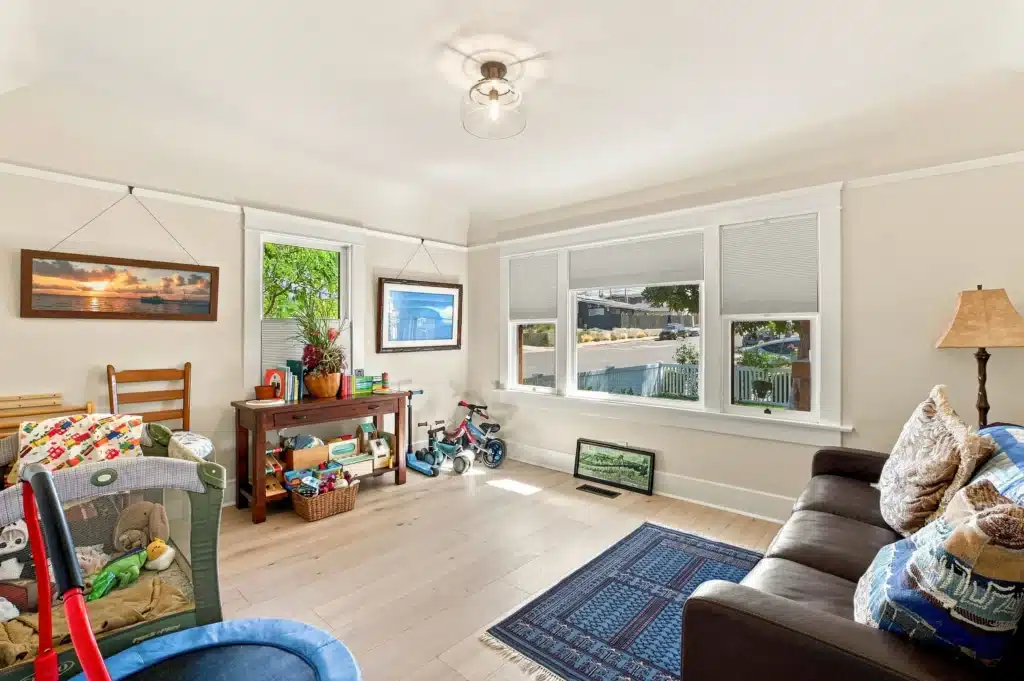
Opening the floor plan is the most popular change, and the one that needs the most care. Removing a load-bearing wall requires an engineered beam and a permit, and in an older home the framing behind the plaster may not match the drawings. A site visit and a structural review should come first.
Adding Space to an Older Home
When a house is too small, an addition can be the best way to stay in the neighborhood. The challenge in an older home is matching the original. Roof pitch, eaves, window proportions and siding or stucco texture all need to line up so the new space looks like it belongs. Our guide to room addition costs covers pricing in more detail.
Renovating Older Homes Across San Diego County
- North Park, Kensington, Mission Hills and Normal Heights: older neighborhoods with craftsman, Spanish and period homes, where character details and historic review come up most often.
- Linda Vista, Allied Gardens, Serra Mesa, San Carlos and Del Cerro: mid-century homes where updated systems, open layouts and refreshed kitchens and bathrooms are the usual priorities.
- La Mesa, El Cajon, Santee, Lemon Grove and Spring Valley: established neighborhoods with mixed-age housing, where renovating is often a better value than moving.
- Poway, Chula Vista, Carlsbad and Encinitas: older homes on larger lots, where renovations often pair with additions or outdoor living space.
The right approach depends on the home’s age, condition and design, not the neighborhood alone.
Choosing a Contractor for an Older Home
Experience with older homes matters more here than in new construction. Ask these questions before you sign:
- How do you handle hidden conditions once the walls are open, and how are change orders priced?
- Do you test for lead and asbestos and follow lead-safe practices on pre-1978 homes?
- Have you handled permits and historic review for older homes in my area?
- Can I see completed renovations of homes from a similar era?
- Do you handle design and construction under one contract?
Our guide to finding a trusted remodeling contractor covers more of the checklist.
Elements Design & Build: Renovating Older Homes in San Diego
At Elements Design & Build, we renovate older homes across San Diego County, from craftsman bungalows to mid-century ranches, handling design, permits and construction under one contract. Our projects start at $15,000, and we plan each one around what the home needs, from updating systems to keeping the details that make it special.
Learn more about our home remodeling services
Thinking About Renovating an Older Home?
The best first step is a free in-home consultation. We will walk through your home, talk through your goals and budget, and give you honest guidance on what to keep, what to update and what to plan for.